The browser blocks ads brilliantly. The founder posts opinions loudly. Here is how to think about both - without the drama deciding for you.

Why this article exists
Most "best private browser" lists pretend software exists in a vacuum. It does not.
Brave is a popular recommendation, and almost every time it comes up, someone mentions the founder.
So instead of dodging that, this guide does the boring-but-useful thing: separate the three questions that usually get mashed into one argument.
Those questions are: Is the browser any good? Who is the man running it, and what does he actually believe? And has the company itself done shady things?
Each deserves its own answer.
Brave is a genuinely fast, privacy-focused Chromium browser with strong ad and tracker blocking built in. The technology mostly delivers what it promises.
The complications are two separate things people tend to blur together: the personal and political views of co-founder and CEO Brendan Eich, and a list of actual product controversies the company has had over the years.
If the founder's politics bother you but you want the same privacy-first feel, Zen Browser is the easiest off-ramp. We cover it near the end.
First, the boring good news: the browser works
Brave is built on Chromium, the same open-source base as Google Chrome. That means sites render the way they do in Chrome, and most Chrome extensions install fine.
The difference is what ships turned on by default. Brave Shields blocks third-party ads, trackers, and cross-site cookies out of the box, so you are not hunting for extensions on day one.
It also includes fingerprinting protection, automatic HTTPS upgrades, and a private window mode that can route through the Tor network. For a lot of people, that is a meaningful upgrade over a stock browser with nothing configured.
If you just want the software, our Brave Browser download page has the current build and clean mirror links. You can stop reading here if the politics genuinely do not matter to you - and that is a completely valid choice.
Who is Brendan Eich, anyway?
Brendan Eich is not a random tech bro. He invented JavaScript - the language running on roughly every website you visit - and co-founded the Mozilla project behind Firefox.
In 2015 he co-founded Brave Software with Brian Bondy, and he remains its CEO in 2026. By any technical measure, he is one of the most consequential people in the history of the web.
That track record is exactly why his opinions get attention. When the creator of JavaScript posts something spicy, people notice.
The founder's personal and political views (the part you came for)
Here is where we keep it factual rather than picking a side. The defining episode happened at Mozilla, before Brave existed.
In 2008, Eich donated 1,000 dollars to California's Proposition 8, a ballot measure that sought to ban same-sex marriage. When that donation resurfaced in 2014 - right as he was named Mozilla CEO - it triggered intense backlash from employees and the public.
He resigned about eleven days into the job. Depending on who you ask, that was either appropriate accountability for a public leader or an overreach now filed under "cancel culture". Both framings exist, loudly, and this guide is not going to settle that for you.
Since then, Eich has stayed publicly opinionated, mostly on X. He posts in an anti-establishment register - skeptical of legacy media, pandemic-era policy, and what he frames as elite manipulation of the public.
Supporters read him as a free-speech-minded contrarian who walks his privacy talk. Critics read him as someone whose timeline reliably wanders into culture-war territory. The honest summary is that his views are genuinely polarizing, and he does not appear interested in toning them down.
The fair way to hold this: a CEO's opinions are real information about a company's leadership, and you are allowed to weigh them. They are also not a virus that infects your address bar. A donation from 2008 does not phone home when you open a tab. Both things can be true at once.
Brave's actual controversies (these are about the product, not the politics)
This is the part that matters more for daily use, because it is about what the software did, not what the founder tweeted.
The headline incident: in 2020, users discovered Brave was auto-completing typed cryptocurrency URLs - like Binance, Coinbase, Ledger, and Trezor - into versions that contained Brave's own affiliate referral code.
For a browser that markets itself on not touching your data, quietly editing URLs you typed was a bad look.
Eich apologized publicly, called it a mistake, said it was fixed, and promised it would not happen again. He also noted the affiliate code had been sitting in the open-source repository for months, which critics found more damning than reassuring.
That was not the only flashpoint. Over the years Brave has drawn criticism on several fronts:
- Early plans floated around replacing publishers' ads with Brave's own ad units, which publishers and creators argued undercut their revenue.
- A past version of the Tor-enabled private window mode was found leaking some requests, undermining the anonymity it implied.
- The Basic Attention Token (BAT) rewards model and crypto integration are polarizing - some users love getting paid to view ads, others see the whole token economy as a gimmick.
- More recent grumbling around premium products and "debloat" builds led to a wave of online misinformation that Eich himself spent the 2025-to-2026 New Year doing damage control on.
To Brave's credit, the company develops in the open, fixed the issues it got caught on, and the affiliate scheme was reversed quickly once exposed. Reputational damage was real but, clearly, not fatal - Brave kept growing.
The takeaway is not "Brave is evil". It is "Brave is a company with commercial incentives, and a privacy brand does not exempt it from scrutiny". Trust, but verify.
So should the founder's politics change how you click?
That is genuinely your call, and reasonable people land in different places.
If your view is that software should be judged on its merits and a leader's personal donations are not your concern, Brave's technology holds up well. The privacy defaults are strong and the speed is real.
If your view is that where your time, attention, and BAT-shaped dollars flow is itself a values decision, then the founder's politics are legitimate input - and you may simply prefer to spend that attention elsewhere. Neither position is irrational.
What we would push back on is the lazy version of either argument: pretending the controversies never happened, or pretending a 2008 donation makes the ad-blocker secretly malfunction. Pick your reasons, just make them good ones.
The off-ramp: Zen Browser, if you want the vibe without the baggage
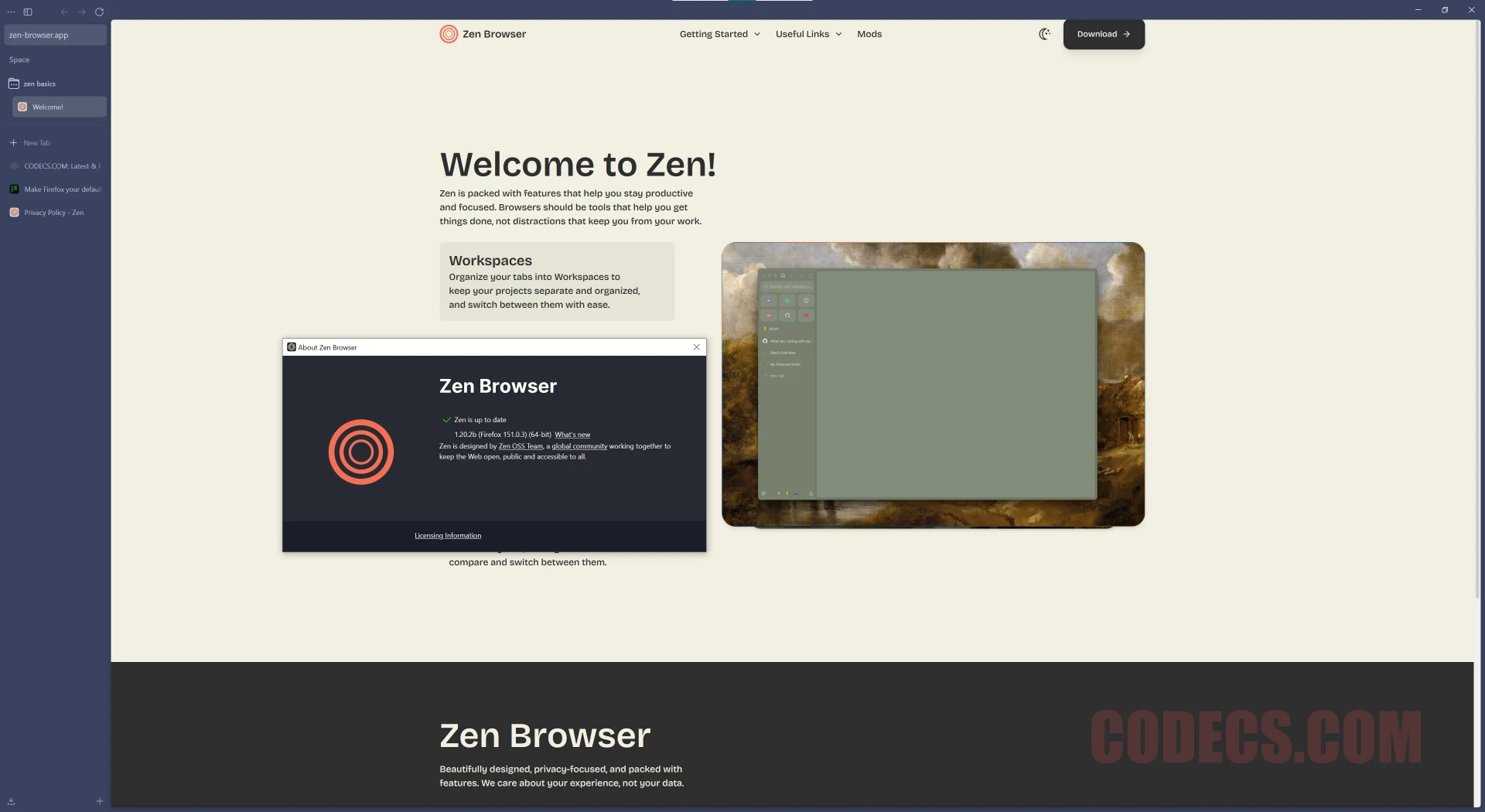
If you like the idea of a privacy-first, design-forward browser but would rather not think about Brave's founder every time you open it, Zen Browser is the cleanest swap.
Zen is a Firefox fork, so it rides on Mozilla's Gecko engine and inherits Firefox's privacy foundation, security patches, and extension support. No crypto token, no affiliate-link history, no celebrity CEO timeline.
What you get instead is a genuinely lovely interface: vertical tabs, split view for comparing pages, workspaces, and a compact mode that hides the chrome until you need it. It looks more like a reading app than a browser, which is a big part of the appeal.
Because it is Firefox underneath, it also plays modern web video - H.264, VP9, and AV1 on YouTube and similar sites - exactly as Firefox does, so streaming is not a compromise.
Prefer to stay closer to the source? Plain Mozilla Firefox remains the independent, no-Chromium option, and Tor Browser is the choice when you need actual anonymity rather than just tracker blocking.
Brave is a strong privacy browser made by a company with a real controversy record and run by a founder with loud, polarizing opinions.
All three of those statements are true and you do not have to resolve them into a single verdict.
Judge the software on the software. Judge the company on its behavior. And judge the founder on his views, if that matters to you - just keep the three ledgers separate. If you would rather skip the whole conversation, Zen Browser is right there.
Frequently asked questions
Technically, yes - it is a mainstream, open-source Chromium browser with strong default privacy protections. Its controversies have been about business practices like affiliate links, not malware. The fixes were applied after public exposure.
Brave Software was co-founded in 2015 by Brendan Eich and Brian Bondy. Eich, the creator of JavaScript and co-founder of Mozilla, remains CEO as of 2026.
In 2020, Brave was caught auto-completing typed crypto exchange URLs into versions carrying its own affiliate referral code. Eich apologized, called it a mistake, and the behavior was removed.
Zen Browser is the closest match for a polished, privacy-first feel, built on Firefox. Mozilla Firefox itself and Tor Browser are also solid, non-Chromium options depending on how much anonymity you need.


Latest news comments
AllThe Vega OS shift is the biggest Firestick story of 2026. Anyone buying now needs to know: 4K Max = sideloading works, plain 4K = ...
News: The New Fire TV Stick 4K Can't Run Kodi - Here's Which Fire Stick Still Can 2 commentsBrave just enabled it by default for stable users yesterday (1.97). Not specified is chromeOS will be passively gaining decode capability too, and ...
News: JPEG XL Is Back in Chrome: What It Means and How to Open JXL Files 1 commentI didn't know it was EU, AND france. That doesn't sound like a good idea. Related to coding or privacy.
News: Meet Qwant: The Private, EU-Built Alternative to Google 1 comment