Spatial sound makes footsteps come from behind you and rain fall from above, and Windows has had a free version built in for years - the hard part is finding where the switch moved to.

Windows ships with Windows Sonic for Headphones, which costs nothing and works on any stereo headphones you already own.
Dolby Atmos and DTS Headphone:X are the paid upgrades, and both give you a free trial first.
Start with the free one, because it is already installed and you can hear whether the effect does anything for you before spending a penny.
The setting has two different names
This trips people up more than anything else in the process. Windows 11 calls it Spatial audio in Settings, while the older dialog and the Windows 10 taskbar menu both call it Spatial sound.
Same feature, same formats, two labels. If a guide tells you to look for one and your screen says the other, you are in the right place.
Windows 11: where the setting lives
Windows 11 puts the dropdown directly on the page for each output device, so you do not need to open any older dialogs.
- Right-click the speaker icon in the taskbar and choose Sound settings.
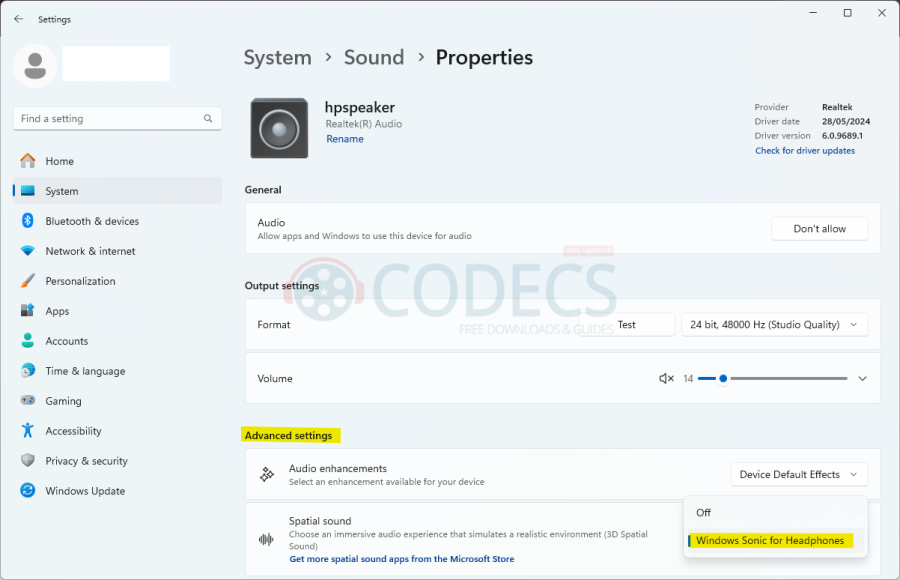
- Under Output, click on the device you are actually listening through - the arrow on its row opens its own page.
- Find the Spatial audio dropdown on that page.
- Choose Windows Sonic for Headphones, then play something and listen.
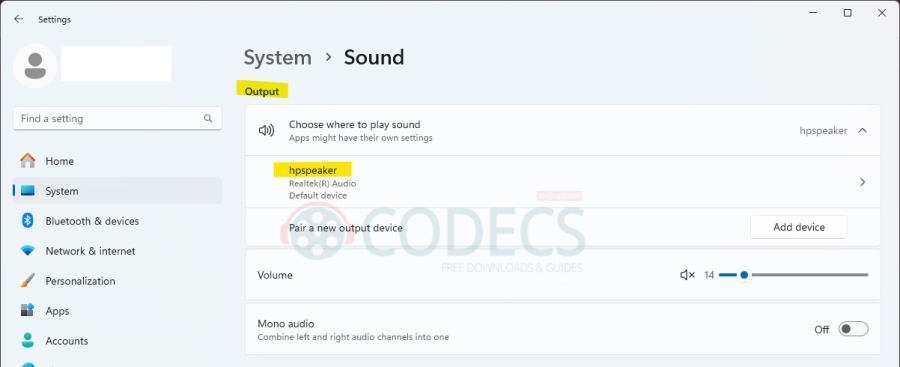
Dolby Atmos for Headphones and DTS Headphone:X appear in that same dropdown once their apps are installed, and not before.
Windows 10: one right-click
Windows 10 is faster than Windows 11 here, which is not something you get to say often.
- Right-click the speaker icon in the taskbar notification area.
- Hover over Spatial sound in the menu that opens.
- Pick Windows Sonic for Headphones from the submenu.
The change applies immediately, with nothing to confirm and no restart. Right-click the same icon and choose Off to switch back.
The route that works on every version
If the menu above is missing or the Settings page will not cooperate, the old sound dialog is still there and still works on Windows 10 and 11 alike.
- Press the Windows key and R together, type mmsys.cpl and press Enter.
- On the Playback tab, click your device once to select it, then click Properties.
- Open the Spatial sound tab and pick a format from the dropdown.
- Click Apply, then OK.
Dolby Atmos for Headphones only shows up in this list after Dolby Access is installed, and DTS Headphone:X after DTS Sound Unbound is.
Why the option is missing or does nothing
Spatial audio is set per device, not once for the whole PC. Switching it on for your headphones changes nothing while Windows is still playing through your monitor over HDMI, and this accounts for most reports that the setting made no difference at all.
Once you have confirmed you are editing the device that is actually making the sound, these are the rest of the usual causes.
- The headphones are not plugged in. Some formats only appear in the list while a device is physically connected, so plug in first and open the menu second.
- The audio driver is generic. Windows sometimes installs a basic driver that exposes no spatial formats - Realtek HD Audio Codecs covers most consumer machines.
- The app was installed but not opened. Dolby Access and DTS Sound Unbound both have to be launched and signed into once before their format joins the dropdown.
- Nothing you are playing is mixed for it. Spatial audio repositions a surround mix, so a plain stereo music track has very little for it to work with.
If you swap between headphones and speakers often, SoundSwitch moves the default device with a hotkey and saves the trip through the menu each time.
What Dolby Atmos and DTS actually cost
This is the part most guides get wrong, because the answer depends on what you are listening through rather than on which brand you pick.
| Format | Through headphones | Through a soundbar or receiver |
|---|---|---|
| Windows Sonic | Free, already installed | Not applicable |
| Dolby Atmos | Free trial, then a one-time purchase | Free over HDMI |
| DTS | Free trial, then a one-time purchase | Free on Windows 11 |
Check before you pay. If your spatial sound menu already lists Dolby Atmos for Home Theater, your soundbar or receiver negotiated it over HDMI on its own and the headphone licence adds nothing to that setup. Some laptops and gaming headsets also arrive with a licence already attached, so open the app and look before reaching for a card.
For the longer version of the comparison - what each one does to a mix and who tends to prefer which - read which of the three to pick. If you are weighing the formats themselves rather than the apps, DTS against AAC covers that ground.
DTS Audio Processing is a different thing
Plenty of people arrive here having installed DTS Audio Processing and wondering why no new option appeared in the spatial sound menu.
It is not a spatial sound format. It is an enhancement layer that shipped preinstalled on certain MSI, ASUS and HP machines, it attaches to a specific audio driver, and it adds an equaliser and tuning presets rather than positional audio.
If that is what you actually wanted, FxSound does the same job on any PC, and Equalizer APO goes deeper if you want manual control.
Our walkthrough of Equalizer APO and Peace sets it up step by step.
What spatial sound will not fix
It is a positioning effect, not a repair tool, so it is worth knowing what it leaves alone.
- A film with no sound at all. That is a missing decoder rather than a spatial problem - silent AC3 and DTS tracks covers it.
- Laptop speakers. The drivers sit centimetres apart, so there is almost no stereo field for the processing to widen.
- Local Atmos files that will not decode. TrueHD and E-AC-3 tracks need LAV Filters or the K-Lite Codec Pack before Windows can position anything.
- A file you are not sure about. Drop it into the Codec Finder and it will tell you what the audio track actually is.
Quick questions
Do I need special headphones for spatial sound?
No. Any stereo headphones work, because the processing happens inside Windows before the sound reaches them.
Is Windows Sonic really free?
Yes, completely, and it is already part of Windows with nothing to download or sign into. It is the one you should try first.
Why can I not see Dolby Atmos in the list?
The format only joins the dropdown after Dolby Access is installed and opened at least once. Installing it and never launching it is the usual reason.
Does spatial sound work through speakers?
Through a soundbar or receiver over HDMI, yes, and usually for free. Through laptop or desktop speakers the effect is small enough that most people cannot hear it.
Will it help in games?
In shooters and anything with vertical space, noticeably - footsteps above and behind you become much easier to place. In a flat 2D game it does nothing worth having.
Do I have to restart after turning it on?
No, the change applies straight away. A restart is only worth trying after installing Dolby Access or DTS Sound Unbound if their format has not appeared.
Switch on Windows Sonic first, listen for a week, and only then decide whether a paid format is worth it to you.
Download Dolby Access and run the free trial when you are ready to compare, or leave a comment telling us which format you settled on and what you listen through.
More decoders, drivers and enhancement tools sit in the Audio Codecs section.


Latest comments
AllXMediaRecode gives only the option to Copy (No convert) in Audio Mode drop down. I am trying to convert/recode the EAc3 ...
Guide: How to Convert EAC3 Audio to AC3 or AAC With XMedia Recode 1 commentTo view major football league live
Guide: Free Popular IPTV Playlist: Where to Get Fresh, Legal M3U Links in 2026 20 commentsThe link isn't working. [link]
Guide: Free M3U Playlist for TiviMate: Legal Lists That Load Cleanly 1 comment